From First Call to Final Walkthrough in Carteret
Restoration calls from Carteret come into our Woodbridge Township dispatch directly — there is no triage layer between you and the person who decides what equipment ships with the truck. The first call captures address, loss type, severity, and access. By the time the crew is in the driveway they already have the moisture meters, extraction units, dehumidifiers, and containment supplies that match the loss profile.
For losses that need immediate intervention (pipe failure, smoke contamination, sewage event, structural envelope breach), the dispatch standard is on-site inside the hour. Carteret is roughly 4 miles from where our Woodbridge Township crew bases out of, so under normal traffic that is a 12-20 minute response. We pre-stage trucks and equipment for the seasonal surge windows specifically so individual arrival times do not slip during storm events.
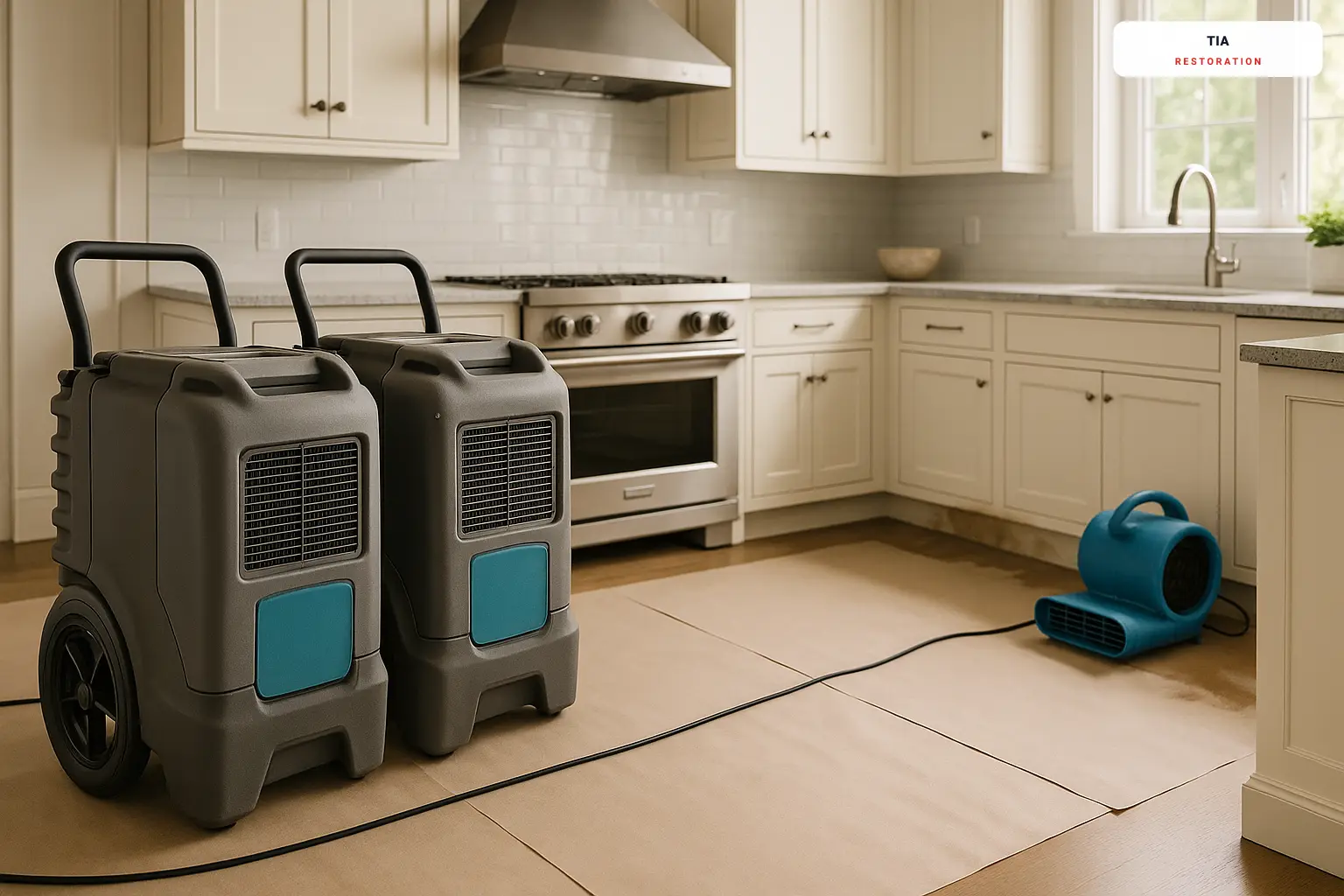
The on-site sequence: shut off the source, document the damage with photos and moisture readings, deploy extraction and drying equipment sized to the loss, monitor daily until each substrate returns to dry-standard. Reconstruction picks up on the back end with the same crew, scoped from the same Xactimate that mitigation produced. No handoff between mitigation and rebuild contractors, no separate negotiation, no scope-gap that the homeowner has to bridge.
Working with adjusters on Carteret losses
Insurance handling on Carteret jobs follows the standard our carriers expect: building-diagram-mapped moisture readings, sequential photo documentation of every wet surface, Xactimate scopes with line-item pricing the adjuster can approve, and direct billing once authorization is on file. The cause-of-loss narrative we attach is the part that matters most — it determines which policy responds (homeowners, NFIP, sewer backup endorsement) and how much the carrier covers.